The boujee meaning in English is a point of confusion for a lot of people, mainly because the word started as slang and then got remixed by pop culture. If you have heard someone described as “boujee” and wondered whether it was a compliment, an insult, or just a way to describe a certain lifestyle, you are not alone. This guide breaks down exactly what boujee means, where it came from, and how to use it without sounding out of touch.
Quick Answer: Boujee means acting or appearing wealthy, luxurious, or high-class, often in a way that is flashy or aspirational. It is a stylized spelling of “bougie,” which itself comes from the word “bourgeoisie.”
What Does Boujee Mean in English?
At its core, boujee describes someone or something that is fancy, upscale, or trying to be. The boujee meaning in English typically points to a person who enjoys the finer things in life, whether that is designer clothes, five-star restaurants, or a general air of sophistication. It can be used affectionately to describe someone who has good taste, or it can be used sarcastically to describe someone who is trying too hard to look rich.
The word carries a specific energy. A boujee person might refuse to drink cheap coffee, insist on flying first class, or post photos of expensive meals on social media. But unlike the word “rich,” boujee is less about actual net worth and more about a performance of wealth or taste. You can be boujee on a budget. In fact, many people use the term to describe themselves when they treat themselves to something small but luxurious, like a fancy latte or a spa day.
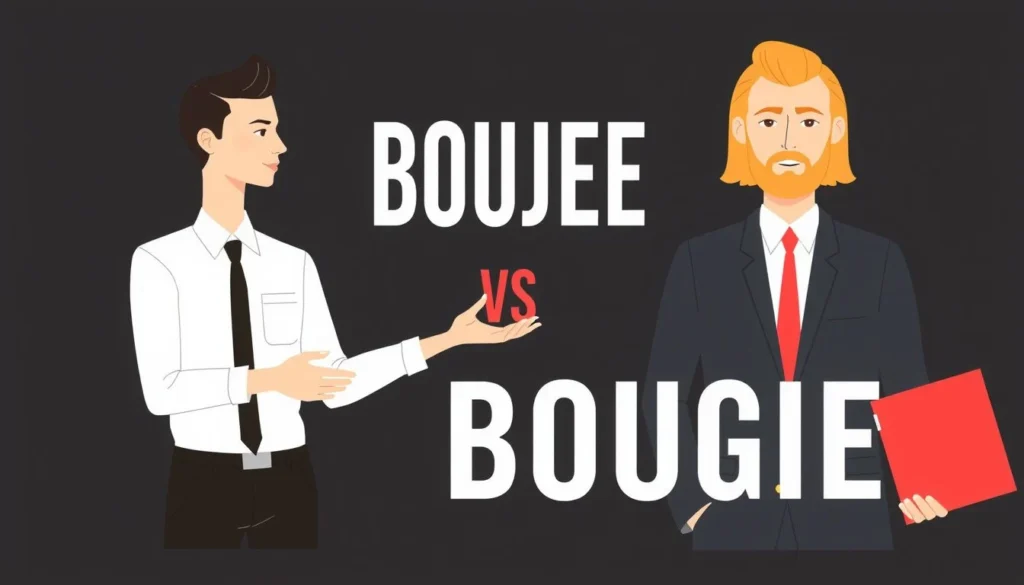
Boujee vs. Bougie: Is There a Difference?
You will see both spellings. They mean the same thing in practice, but there is a slight cultural distinction.
Bougie is the older spelling, directly shortened from “bourgeoisie.” It has been used in African American Vernacular English (AAVE) for decades to describe someone who acts upper-class or pretentious.
Boujee is the stylized, phonetic spelling that became mainstream after the 2016 song “Bad and Boujee” by the rap group Migos. The song’s title, and its massive popularity, cemented “boujee” as the go-to spelling for a younger generation. The “jee” ending gives it a bouncier, more playful feel.
In everyday conversation, the two are interchangeable. You can say “She is so bougie” or “She is so boujee” and people will understand you mean the same thing. The choice comes down to style and context. Boujee feels a bit more current and tied to hip-hop culture. Bougie feels slightly more traditional and closer to the original French root.

Where Did the Word Boujee Come From?
To really understand the boujee meaning in English, you need to trace it back. The word has a surprisingly long journey.
The root is the French word bourgeoisie, which historically referred to the middle class, specifically the class of merchants and professionals who sat between the working class and the aristocracy. Karl Marx used the term heavily in his writing to describe the capitalist class that owned the means of production.
Over time, “bourgeois” evolved in English to describe someone with conventional, materialistic, middle-class values. Think of someone who cares a lot about appearances, property, and social status. That is the original flavor of the word.
From there, the word got shortened. Bougie became slang, particularly in Black communities in the United States, to describe someone who acted above their station or embraced a certain upwardly mobile, polished lifestyle. The term could be used with affection, as in “my bougie aunt who always has the good china out,” or with criticism, as in “he got a little money and now he is acting bougie.”
Then came 2016. The song “Bad and Boujee” by Migos featuring Lil Uzi Vert spent weeks at the top of the Billboard Hot 100. The phrase “bad and boujee” entered the lexicon almost overnight. Suddenly, boujee was everywhere, from memes to merchandise to everyday conversation. The song shifted the word’s connotation slightly, making it sound less like an insult and more like a badge of honor. Being boujee meant you had made it, or at least you looked like you had.
How to Use Boujee in a Sentence
Using boujee correctly is more about tone than grammar. The word works as an adjective, and you can apply it to people, places, things, and even experiences.
Here are some common ways to use it:
- Describing a person: “My cousin got a promotion and now she is acting all boujee with her designer bags.”
- Describing a place: “That new rooftop bar is way too boujee for me. I just want a dive bar with cheap beer.”
- Describing a thing: “I bought a boujee candle that costs forty dollars. It smells incredible and I regret nothing.”
- Describing an experience: “We did a boujee wine tasting in Napa for our anniversary. It was worth every penny.”
- Self-deprecatingly: “I know instant ramen is not boujee, but I added an egg and some green onions, so I am basically a chef.”
Pro Tip: Pay attention to the tone. If you say “that is so boujee” with a smile, it usually means you are impressed or amused. If you say it with a sneer, it means you think the person is being pretentious. Context is everything.
Boujee vs. Classy: Understanding the Nuance
This is where a lot of people get tripped up. Boujee and classy are not synonyms, even though they can overlap.
Classy implies elegance, restraint, and timelessness. A classy person might wear a simple black dress, drive a modest but well-maintained car, and never talk about money. Classy is quiet.
Boujee implies flashiness, trendiness, and a desire to be seen. A boujee person might wear a logo-covered designer outfit, lease a luxury car they can barely afford, and post about it on Instagram. Boujee is loud.
Neither is inherently better or worse. They are just different aesthetics. A good way to think about it is this: classy is old money, boujee is new money with a social media account.
Here is a quick comparison:
| Trait | Classy | Boujee |
|---|---|---|
| Vibe | Understated, elegant, timeless | Flashy, trendy, attention-seeking |
| Spending | Quiet quality, no need to show off | Visible brands, conspicuous consumption |
| Attitude | Confident, no need for validation | Aspirational, wants to be noticed |
| Example | A well-tailored suit with no visible label | A Gucci belt with a giant buckle |
| Social media | Rarely posts about purchases | Posts every luxury purchase |
Understanding this distinction helps you use boujee correctly. If you call a classy person boujee, they might be confused or slightly offended. If you call a boujee person classy, they might take it as a compliment, but it is not quite accurate.
The Cultural Context of Boujee
You cannot fully grasp the boujee meaning in English without acknowledging its cultural roots. The word did not emerge from a vacuum. It came from specific communities and carries specific weight.
In AAVE, bougie (and later boujee) has long been used to describe a particular social dynamic. It often refers to Black people who are perceived as trying to distance themselves from working-class or poorer Black communities by adopting white, upper-middle-class tastes and behaviors. This can be a sensitive topic. The word can be a lighthearted tease among friends, or it can be a sharp critique of classism and respectability politics within a community.
When the word crossed over into mainstream, predominantly white usage via “Bad and Boujee,” some of that nuance got flattened. Today, many people use boujee simply to mean “fancy” or “expensive,” without any awareness of the word’s deeper history or its role in intra-community conversations about class and identity.
This does not mean you cannot use the word. But it is worth being aware that boujee is not just a fun synonym for “luxurious.” It is a word with a specific cultural lineage. Using it thoughtfully means understanding that lineage, even if you do not personally share it.
Pro Tip: If you are using boujee to describe a person, especially a person of color, be mindful. The word can carry a sharper edge than you might intend. When in doubt, describe the specific behavior you are observing (“she only shops at high-end stores”) rather than slapping a label on the person.
Is Being Boujee a Bad Thing?
The short answer: it depends on who you ask and how you mean it.
In some circles, being boujee is a point of pride. It signals ambition, taste, and a refusal to settle for less. The “Bad and Boujee” era celebrated a certain kind of aspirational luxury, particularly for young Black artists who had achieved success against the odds. In that context, boujee was aspirational and empowering.
In other circles, being boujee is a criticism. It suggests superficiality, materialism, and a lack of authenticity. A boujee person, in this view, cares more about appearances than substance. They are trying to buy status rather than earn it.
Most of the time, the word falls somewhere in between. It is a gentle roast, a playful acknowledgment that someone is a little extra about their lifestyle choices. You might call your friend boujee for ordering a twenty-dollar cocktail, and you might mean it with equal parts admiration and amusement.
The key is self-awareness. A person who embraces their boujee tendencies with humor and humility is usually fun to be around. A person who takes their boujee status too seriously can be exhausting.
Key Takeaways
- The boujee meaning in English is acting or appearing wealthy, luxurious, or high-class, often in a flashy or aspirational way.
- Boujee and bougie are the same word with different spellings. Boujee became popular after the 2016 Migos song “Bad and Boujee.”
- The word traces back to the French “bourgeoisie,” which described the middle class, and it evolved through AAVE before going mainstream.
- Boujee is not the same as classy. Classy is understated and timeless; boujee is flashy and trend-driven.
- Use boujee with awareness of its cultural roots. It can be a compliment, a playful tease, or a critique, depending on context and tone.
Frequently Asked Questions About Boujee Meaning in English
Q: What does boujee mean in English slang?
A: In English slang, boujee means fancy, luxurious, or high-class, often in a showy or aspirational way. It describes someone who enjoys expensive things and wants to be seen enjoying them. It can be a compliment, a tease, or a mild insult depending on the tone.
Q: Is boujee a compliment or an insult?
A: Boujee can be either. It is often used playfully or affectionately to describe someone with expensive taste. However, it can also be used sarcastically or critically to describe someone who is pretentious, materialistic, or trying too hard to appear wealthy.
Q: What is the difference between boujee and bougie?
A: There is no difference in meaning. Bougie is the older, more traditional spelling, derived directly from “bourgeoisie.” Boujee is a stylized spelling that became popular after the 2016 Migos song “Bad and Boujee.” Both words describe the same concept of acting or appearing upper-class.
Q: Where did the word boujee originate?
A: Boujee originates from the French word “bourgeoisie,” which referred to the middle class. The word was shortened to “bougie” in American slang, particularly in African American Vernacular English, and later respelled as “boujee” after the Migos song popularized it in 2016.
Q: What does it mean when a girl is boujee?
A: When a girl is described as boujee, it typically means she has expensive taste, enjoys luxury experiences, and presents herself in a polished, upscale way. It can be meant as a compliment about her style or a lighthearted observation that she is high-maintenance.
Q: Is boujee the same as rich?
A: Not exactly. Boujee is more about the appearance and performance of wealth than actual wealth. A boujee person may or may not have a lot of money. What defines them is their taste for luxury goods and experiences, and their desire to be seen enjoying them.
Q: Can you use boujee to describe a place or thing?
A: Yes. You can describe a restaurant, hotel, bar, or even a product as boujee. For example, “That new brunch spot is so boujee, they put gold flakes on the pancakes.” It means the place or thing is fancy, trendy, and probably overpriced.
Q: What is the opposite of boujee?
A: The opposite of boujee would be something like “humble,” “low-key,” “down-to-earth,” or “unpretentious.” A person who is not boujee does not care much about luxury brands, expensive restaurants, or appearing wealthy. Slang opposites might include “basic” or “chill.”
Q: Is boujee a real word in the dictionary?
A: Yes. “Bougie” is listed in major dictionaries, including Merriam-Webster and the Oxford English Dictionary, as informal slang meaning “marked by a concern for wealth, possessions, and respectability.” “Boujee” is a variant spelling that is widely recognized, though it may not appear in all dictionaries yet.
Q: How do you pronounce boujee?
A: Boujee is pronounced “BOO-jee.” The first syllable rhymes with “boo” or “blue,” and the second syllable sounds like the letter “G.” It is the same pronunciation as “bougie.”
References & Further Reading
- Merriam-Webster Dictionary: Bougie
- Dictionary.com: Boujee
- Oxford English Dictionary: Bougie
- NPR: The Evolution of ‘Bougie’ and ‘Boujee’
—
About This Article
This article was written to provide a clear, accurate, and culturally informed explanation of the boujee meaning in English. The information is grounded in standard dictionary definitions, documented linguistic history, and cultural analysis from reputable sources. The goal is to help readers use the word correctly and thoughtfully, with an understanding of both its surface meaning and its deeper context.