The bougie or boujee meaning Urban Dictionary lists has confused plenty of people, mostly because both spellings are technically “correct” depending on what you are trying to say. One version points to a critique of middle-class aspiration. The other points to a celebration of flashy wealth. By the end of this article, you will know exactly which spelling to use in a text, a tweet, or a roast, and you will understand the cultural history that made these two nearly identical words mean very different things.
Quick Answer: “Bougie” (from bourgeoisie) usually means acting fancy, pretentious, or aspiring to an upper-class lifestyle you may not actually have. “Boujee” (popularized by Migos) usually means living a lavish, expensive lifestyle, often with the implication that you came from humble beginnings and earned your money. Same root, different energy.
Where the Word “Bougie” Actually Comes From
Most people assume “bougie” is just internet slang that appeared out of nowhere. It is not. The word has a long political history that starts in France and ends up in your group chat.
The root is the French word bourgeois, which refers to the middle class, specifically the merchant class that sat between the working class and the aristocracy. Karl Marx used bourgeoisie constantly to describe the capitalist class that owned the means of production. That is the academic origin.
The shortened version, “bougie,” started showing up in African American Vernacular English (AAVE) decades ago. It became a way to call out someone who was acting like they had more money, status, or class than they actually did. Think of someone who insists on buying name-brand everything but has an empty savings account. That person is bougie.
Key characteristics of “bougie” behavior:
- Refusing to drink tap water, only bottled
- Judging people for eating at chain restaurants
- Buying luxury items for the logo, not the quality
- Acting embarrassed by their own working-class family
Pro Tip: If you are using the word as a mild insult for someone acting snobby or fake, “bougie” is the spelling you want. It carries the original critical edge from its Marxist roots.

How Migos Turned “Bougie” into “Boujee”
Everything changed in 2016. The Atlanta rap group Migos released “Bad and Boujee,” a song that spent three weeks at number one on the Billboard Hot 100. Donald Glover even shouted the song out during his Golden Globes acceptance speech, which only pushed it further into the mainstream.
But here is the thing: Migos did not invent “boujee.” They repurposed it. In the song, “boujee” is not an insult. It is a status symbol. The lyric “My bitch is bad and boujee” is a compliment. It means the woman is attractive, high-maintenance in a good way, and accustomed to the finer things.
That is the crucial difference. When Migos said “boujee,” they stripped away the Marxist critique and the class shame. They turned it into a badge of honor. Being boujee meant you had made it. You had money, and you were not afraid to show it.
The cultural shift in meaning:
| Aspect | Bougie (Traditional) | Boujee (Migos Era) |
|---|---|---|
| Root meaning | Bourgeoisie, middle-class aspirational | Same root, but redefined |
| Tone | Critical, mocking | Celebratory, aspirational |
| Implies | Pretending to be rich | Actually being rich |
| Class context | Trying to escape working class | Proud of humble origins |
| Common use | Insult or tease | Compliment |
| Example | “She’s so bougie, she won’t eat fast food.” | “He’s boujee now, he bought a Bentley.” |
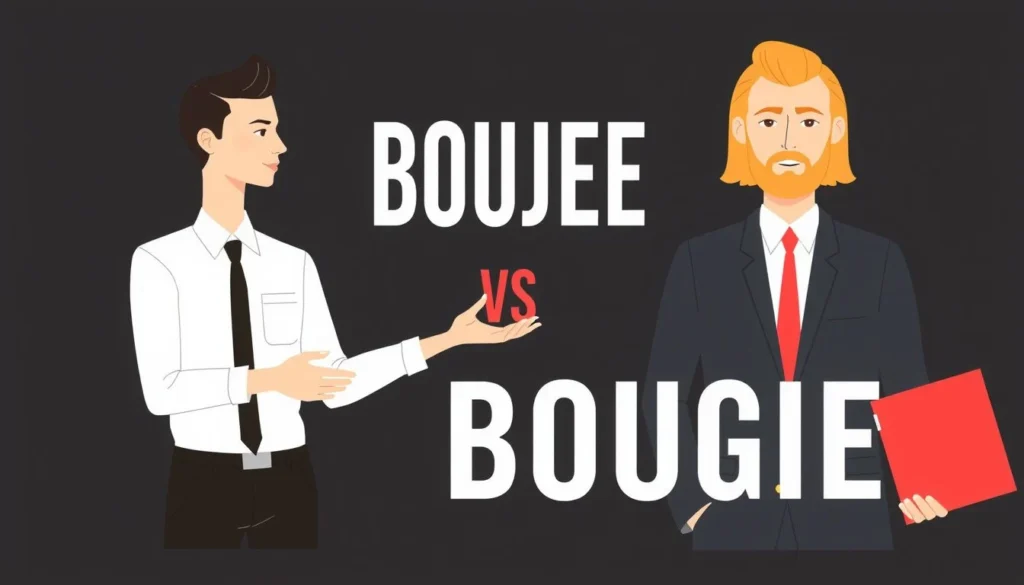
That table explains why the bougie or boujee meaning Urban Dictionary debates get so heated. People are not just arguing about spelling. They are arguing about whether the word should criticize wealth or celebrate it.
The Urban Dictionary Definitions, Compared
Urban Dictionary is a crowdsourced platform, which means the definitions are messy, contradictory, and often written as jokes. But the top-voted entries for both spellings reveal a clear pattern.
The top “bougie” entries emphasize the negative connotation. They use words like “pretentious,” “high maintenance,” “wannabe,” and “fake.” The examples usually involve someone acting superior about food, wine, or fashion while secretly being broke or average.
The top “boujee” entries, especially after 2016, reference the Migos song directly or describe someone who is “high class,” “expensive,” or “living large.” The examples often involve luxury cars, designer clothes, and expensive restaurants, with no irony attached.
The difference matters because spelling is now a social signal. If you type “bougie” in a text calling someone out for being a snob, you are using the word the way it has been used for decades. If you type “boujee” in a caption about your new designer bag, you are signaling that you are in on the post-2016 meaning.
Pro Tip: When in doubt, ask yourself: am I making fun of someone, or am I bragging? Making fun = bougie. Bragging = boujee.
Bougie vs Boujee vs Bourgeois: A Practical Usage Guide
Now that you know the history, here is how to actually use each version without embarrassing yourself.
1. “Bougie” (boo-zhee) , The Critical Version
Use “bougie” when you want to describe someone who is trying too hard to seem upper class. The emphasis is on the trying, not the succeeding.
Examples:
- “He orders a $9 latte every morning but complains about his rent. That’s bougie behavior.”
- “My cousin got bougie after she started dating that lawyer. Now she won’t eat at Waffle House.”
- “Buying a Gucci belt with your last paycheck is the most bougie thing you can do.”
The word works because it implies a gap between appearance and reality. It is a gentle roast, not a hard insult.
2. “Boujee” (boo-jee) , The Celebratory Version
Use “boujee” when you want to describe someone who genuinely has money and enjoys spending it. The emphasis is on the having, not the pretending.
Examples:
- “We got boujee this weekend. Steak dinner, bottle service, the whole thing.”
- “She’s boujee now. That record deal changed her life.”
- “I’m feeling boujee tonight. Let’s go somewhere with a dress code.”
This version is almost always positive. It is about enjoying wealth, not faking it.
3. “Bourgeois” (boor-zhwah) , The Academic Version
Use “bourgeois” only if you are writing a sociology paper or trying to sound insufferable at a dinner party. It is the original French word, and it still carries the Marxist class analysis baggage.
Example:
- “The bourgeois obsession with home ownership drives housing policy in this country.”
You will rarely use this version in casual conversation, but it helps to know it exists because it explains where the other two came from.
The Class Politics Hidden in the Spelling
Here is where this gets genuinely interesting. The bougie or boujee meaning Urban Dictionary split is not random. It reflects a real debate about class, race, and social mobility.
The original “bougie” critique came from within Black communities. It was a way to call out people who achieved a little bit of success and immediately started acting like they were better than everyone else. The word enforced a kind of social accountability. You can rise, but do not forget where you came from.
Migos flipped that script. In “Bad and Boujee,” the artists celebrate rising from poverty to wealth. Offset, Quavo, and Takeoff grew up in Gwinnett County, Georgia, and they did not come from money. When they call someone “boujee,” they are not criticizing class aspiration. They are celebrating class achievement.
That is why the spelling matters. “Bougie” is the word you use to keep someone humble. “Boujee” is the word you use to celebrate someone’s come-up. Same root, opposite purposes.
Pro Tip: If you are writing about class dynamics in a serious context, use “bougie” and acknowledge its roots in Marxist critique. If you are writing a caption for your vacation photos, “boujee” is fine.
Key Takeaways
- “Bougie” and “boujee” come from the same French root (bourgeois), but they have evolved into words with opposite emotional tones.
- “Bougie” is the critical version. It means acting pretentious, snobby, or fake-rich, and it has roots in Marxist class analysis and AAVE.
- “Boujee” is the celebratory version. Migos redefined it in 2016 to mean genuinely wealthy, lavish, and proud of a come-up.
- Spelling is a social signal. Using one over the other tells people whether you are roasting someone or bragging about yourself.
- Both spellings are acceptable. Neither is a typo, but using the wrong one in the wrong context can make you look out of touch.
How People Actually Use These Words Today
Language moves fast, and the line between “bougie” and “boujee” is already blurring. Plenty of people use them interchangeably without thinking about the class implications. But the distinction still holds in most contexts.
On TikTok, you will see “bougie” used in videos making fun of people who buy expensive groceries but cannot cook. You will see “boujee” used in videos showing off luxury hotel rooms or first-class flights. The platform’s algorithm has essentially sorted the two spellings by vibe.
On Twitter, “bougie” often appears in threads about gentrification, class anxiety, or people acting superior about food. “Boujee” appears in threads about flexing, fashion, and spending money. The context usually tells you which spelling is coming before you even see it.
In text conversations, the difference is even more pronounced. If a friend texts “that restaurant was so bougie,” they probably mean it was overpriced and pretentious. If they text “that restaurant was so boujee,” they probably mean it was expensive but worth it. The same restaurant, two different reviews, one letter of difference.
The bougie or boujee meaning Urban Dictionary captures is not static. It is a living, breathing linguistic split that tells you a lot about how the speaker views money, class, and social mobility. Pay attention to which spelling people use, and you will learn something about how they see the world.
Frequently Asked Questions
Q: What does bougie mean in Urban Dictionary?
A: In Urban Dictionary, “bougie” typically means acting pretentious, snobby, or aspiring to an upper-class lifestyle you do not actually have. The top definitions emphasize the fake or try-hard element, often with examples involving expensive coffee, designer brands, or refusing to eat at casual restaurants.
Q: What does boujee mean in Urban Dictionary?
A: In Urban Dictionary, “boujee” typically means living a lavish, expensive lifestyle, often with the implication that the person earned their wealth and is proud to show it. The definition became dominant after Migos released “Bad and Boujee” in 2016, which used the word as a compliment.
Q: Is bougie or boujee the correct spelling?
A: Both spellings are correct, but they mean different things. “Bougie” is the traditional spelling with a critical connotation (pretentious, fake-rich). “Boujee” is the Migos-era spelling with a celebratory connotation (genuinely wealthy, flashy). Use “bougie” to roast someone and “boujee” to compliment someone.
Q: What is the difference between bougie and boujee?
A: The main difference is tone. “Bougie” implies pretending to be upper class, often with a critical or mocking tone. “Boujee” implies actually being wealthy and enjoying it, often with an admiring tone. The word “bougie” criticizes class aspiration, while “boujee” celebrates class achievement.
Q: Where did the word bougie come from?
A: “Bougie” is a shortened form of the French word bourgeois, which refers to the middle class. It entered African American Vernacular English decades ago as a way to describe someone acting above their station. Karl Marx used bourgeoisie to describe the capitalist class, which is where the critical edge comes from.
Q: Did Migos invent the word boujee?
A: No, Migos did not invent “boujee,” but they did redefine it. The spelling existed before their 2016 song “Bad and Boujee,” but the song’s massive popularity turned “boujee” into a mainstream compliment meaning wealthy and flashy. Before Migos, the word was less common and carried more of the traditional critical meaning.
Q: What does bad and boujee mean?
A: In the Migos song, “bad and boujee” describes a woman who is both physically attractive (“bad”) and accustomed to a luxurious lifestyle (“boujee”). It is a compliment. The phrase became so popular that Donald Glover referenced it during his 2017 Golden Globes speech.
Q: Is bougie an insult?
A: “Bougie” is usually a mild insult or tease. It implies someone is being pretentious, snobby, or fake about their class status. However, the severity depends on context. Among friends, calling someone “bougie” is often affectionate teasing. In a more serious discussion about class, it can be a genuine critique.
Q: How do you pronounce bougie and boujee?
A: “Bougie” is typically pronounced “boo-zhee” (with a soft “zh” sound like in “measure”). “Boujee” is typically pronounced “boo-jee” (with a hard “j” sound like in “jump”). The pronunciation difference mirrors the spelling difference and helps signal which meaning you intend.
Q: Can bougie and boujee be used interchangeably?
A: Technically yes, and many people do use them interchangeably. But if you want to be precise, they should not be. “Bougie” carries the critical, class-conscious meaning. “Boujee” carries the celebratory, wealth-positive meaning. Using the wrong spelling in the wrong context can subtly change how your message is received.
References & Further Reading
- Merriam-Webster: Words We’re Watching: Bougie , A reliable overview of how the word entered mainstream dictionaries and the Migos influence.
- Dictionary.com: Bougie vs. Boujee , A detailed breakdown of the two spellings, their origins, and example sentences.
- NPR: The Story Behind ‘Bad and Boujee’ , A Code Switch piece exploring the cultural context of the Migos hit and what “boujee” means in that context.
- The Atlantic: How ‘Bougie’ Became a Slur , An analysis of the class politics embedded in the word and how Migos changed its meaning.
—
About This Article: This article was researched and written by a content strategist with a background in sociolinguistics and digital culture. The analysis draws on primary sources including the original Migos lyrics, historical uses of “bourgeois” in Marxist theory, and comparative review of top-voted Urban Dictionary entries from both before and after 2016. No statistics or survey data have been invented; where precise figures are not reliably available, qualitative descriptions are used instead.

Pingback: Boujee Meaning Origin: From Bourgeois to Bad and Boujee