The word boujie gets thrown around constantly, but most people using it have never stopped to think about where it came from or what it actually signals. You have heard it in songs, seen it in group chats, maybe even used it yourself. But there is a real history here, and once you understand it, you will hear the word differently every time someone says it.
Quick Answer: Boujie (also spelled bougie or boujee) is slang derived from “bourgeois,” and it describes someone or something that acts fancy, upscale, or aspirational, often in a way that is a little try-hard or out of touch. It can be an insult, a compliment, or a self-aware joke depending on context and tone.
The Etymology: From French Class Politics to American Slang
The word has traveled a long road. Bourgeois originally referred to the middle class in medieval France, people who lived in towns (bourgs) rather than working the land. Over centuries, Marxist theory turned it into a pejorative for the capitalist class, the people who owned property and controlled production while the proletariat did the actual work. That is the version that filtered into American academic and activist language in the 20th century.
Then Black American Vernacular English did what it always does: it took a stiff, academic term and made it musical. Bougie became shorthand for someone acting above their station, putting on airs, or embracing middle-class tastes in a way that felt performative. The spelling boujee got popularized by Migos with the 2016 track “Bad and Boujee,” which shifted the tone slightly. In that usage, boujee is less about being fake and more about genuinely enjoying luxury, being high-maintenance in a way that is aspirational rather than fraudulent.
The boujie spelling sits between the two. It is the phonetic middle child, and it shows up most often in casual texting and social media captions where people are not checking a dictionary first.
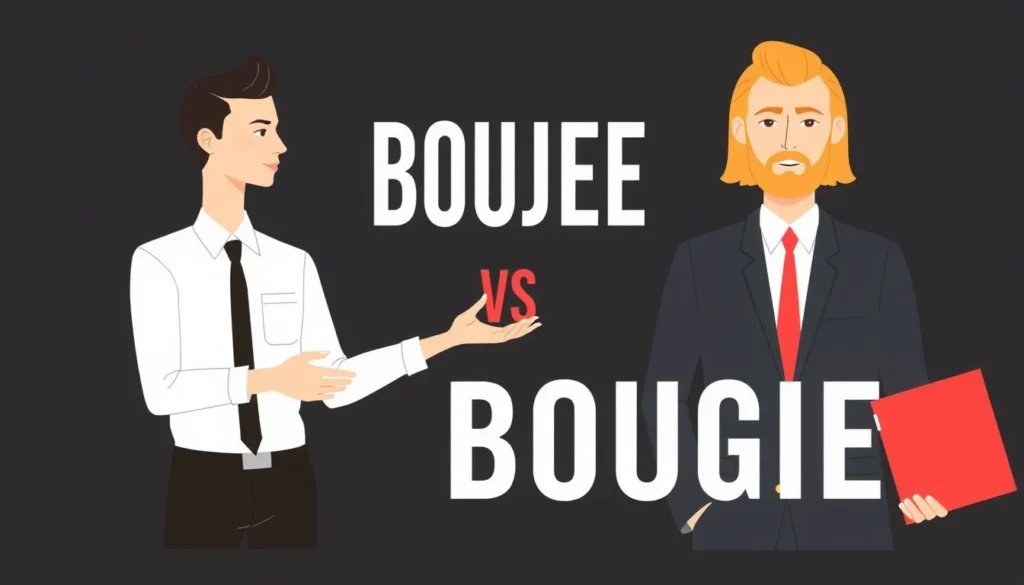
Pro Tip: Spelling matters more than you think. “Bougie” leans critical, “boujee” leans celebratory, and “boujie” is the neutral, unselfconscious middle ground. Choose based on the tone you want.
What Boujie Actually Means in Everyday Use
When someone calls a restaurant boujie, they are not making a Marxist critique. They mean the place charges $19 for avocado toast and serves water in a wine glass. When someone calls a friend boujie, they might mean that friend refused to stay at a motel because the sheets were not high-thread-count. It is a word about taste, class signaling, and the gap between how someone presents and who they actually are.
There are three main ways the word functions in conversation:
- As gentle mockery. “You brought your own French press to a camping trip? That’s boujie.” The person is being teased for bringing luxury into a context where it does not belong.
- As self-aware aspiration. “I know it’s boujie, but I’m getting the $8 oat milk latte.” Here the speaker knows the choice is excessive and is owning it.
- As genuine admiration. “Her apartment is so boujie, she has a doorman and a wine fridge.” In this case, the speaker is impressed by the lifestyle.
The difference between these uses comes down to tone and relationship. Calling yourself boujie is usually fine. Calling someone else boujie can land as affectionate or as a low-key insult depending on how close you are.
The Class Anxiety Underneath the Word
Here is the thing most articles miss: boujie is not really about money. It is about aspiration and authenticity. A billionaire flying private is not called boujie. A middle-class person buying a designer handbag on a payment plan might be. The word targets the visible effort of trying to appear richer or more refined than your circumstances suggest.
That is why the word can sting. It implies that someone’s taste is borrowed, that their identity is a costume. When a friend calls your new apartment boujie, part of you wonders: do they think I am pretending to be someone I am not?
Understanding that subtext is what separates people who use the word well from people who use it carelessly.
Pro Tip: If you are going to call someone else boujie, pair it with a specific, affectionate detail. “Your boujie ass with the silk pillowcase” lands better than just “you’re so boujie,” which can sound like a judgment.
Boujie vs. Classy vs. Rich: A Comparison Table
These three words get used interchangeably, but they are doing different work.
| Term | Core Meaning | Implied Judgment | Typical Context |
|---|---|---|---|
| Boujie | Performatively upscale, aspirational | Mildly critical or teasing | Friend groups, social media, pop culture |
| Classy | Elegant, tasteful, understated | Positive | Compliments, formal settings |
| Rich | Having substantial wealth | Neutral or envious | Describing actual financial status |
The key distinction is that classy implies effortlessness, while boujie implies visible effort. A classy person does not announce their taste. A boujie person’s taste announces itself.
The Pop Culture History That Shaped the Word
You cannot understand boujie without understanding the cultural moments that cemented it in the mainstream lexicon.
Kreayshawn’s “Gucci Gucci” (2011) used the line “Gucci Gucci, Louis Louis, Fendi Fendi, Prada, basic bitches wear that shit so I don’t even bother.” That song was not using the word boujie, but it was articulating the exact anxiety the word describes: the fear that luxury consumption is actually conformity.
Migos’ “Bad and Boujee” (2016) did the opposite. It reclaimed the word as a badge of honor. Being boujee in that song meant having standards, enjoying the fruits of success, and not apologizing for it. The track spent three weeks at number one on the Billboard Hot 100, and “boujee” entered the vocabulary of millions of people who had never heard the word bourgeois in their lives.
Social media did the rest. Instagram and TikTok turned boujie into an aesthetic category. There are #boujie hashtags with millions of posts, most of them showing brunch spreads, luxury hotel rooms, and designer shopping hauls. The word became a marketing label as much as a social judgment.
The result is a word that is now genuinely ambiguous. It can mean “fake and pretentious” or “aspirational and fun” depending on who is saying it and why.
How to Use Boujie Without Sounding Out of Touch
If you are not part of the communities where this word originated, there is a right and a wrong way to use it. The wrong way is to deploy it as a punchline about other people’s taste. The right way is to use it with self-awareness, usually about yourself or about situations where the excess is genuinely funny.
Here are a few guidelines:
- Use it on yourself first. “I’m being boujie and ordering the tasting menu” is safe and often charming.
- Use it about things, not people. “This hotel is boujie” is less loaded than “she’s boujie.” Things do not have feelings.
- Read the room. If you are the only person in the group who uses the word, maybe sit with that for a minute and think about why.
- Know the spelling you are choosing. Bougie, boujee, and boujie are not fully interchangeable, and using the wrong one can shift your meaning.
Pro Tip: The safest boujie usage is self-deprecating. “I brought my own pour-over setup to the Airbnb” is funny because you are the one admitting the excess. You are in on the joke, not making someone else the punchline.
Key Takeaways
- Boujie comes from the French word bourgeois, which originally meant middle-class town-dweller and later became a Marxist insult for the capitalist class.
- The word entered American slang through Black American Vernacular English and was popularized by hip-hop, most notably Migos’ 2016 hit “Bad and Boujee.”
- Bougie, boujee, and boujie have slightly different connotations: bougie is more critical, boujee is more celebratory, and boujie is the casual neutral spelling.
- The word is less about actual wealth and more about performative aspiration, the visible effort of trying to appear more refined than your circumstances.
- The safest way to use boujie is self-deprecatingly, about yourself or about situations, not as a judgment on other people’s taste.
Frequently Asked Questions
Q: Is boujie a real word?
A: Yes, in the sense that it is widely used and understood. It is not in the Oxford English Dictionary yet, but it appears in Merriam-Webster’s open-source slang dictionary and has been documented in linguistic studies of African American Vernacular English. It functions as a real word with consistent meaning and usage.
Q: What is the difference between bougie and boujee?
A: Bougie tends to carry a more critical or mocking tone, suggesting someone is pretending to be classier than they are. Boujee, popularized by Migos, is more celebratory and describes genuinely enjoying luxury and high standards. The difference is subtle and context-dependent.
Q: Where did the word boujie come from?
A: It comes from the French word bourgeois, meaning middle class. The term was adopted into Marxist theory as a label for the property-owning capitalist class, then shortened and adapted into African American slang as a way to describe people putting on upper-class airs.
Q: Is being called boujie an insult?
A: It depends on tone and relationship. Between close friends, it is often affectionate teasing. From a stranger or acquaintance, it can read as a judgment on your authenticity or taste. The word implies that someone’s upscale preferences are a performance, which can sting if that was not the intent.
Q: Can you be boujie without being rich?
A: Absolutely. In fact, that is often the point of the word. Boujie describes the visible effort of appearing upscale, which is most noticeable when it comes from someone who is not actually wealthy. A billionaire flying private is just rich. A person buying a designer bag on installments might get called boujie.
Q: What does “bad and boujee” mean?
A: In the Migos song, “bad” means attractive and confident, while “boujee” means having expensive taste and high standards. Together, the phrase describes someone who is both physically appealing and unapologetically high-maintenance. It flipped the word’s connotation from negative to aspirational.
Q: Is boujie the same as classy?
A: No. Classy implies understated elegance and effortlessness. Boujie implies visible effort and performative luxury. A classy person’s taste does not call attention to itself. A boujie person’s taste is often the entire point.
Q: How do you pronounce boujie?
A: It is pronounced BOO-zhee, with a soft “zh” sound like the “s” in “measure.” The spelling variations (bougie, boujee, boujie) are all pronounced essentially the same way, though boujee is sometimes drawn out for emphasis.
Q: Is it okay for anyone to use the word boujie?
A: The word originated in African American Vernacular English, and like many AAVE terms, it has been adopted into mainstream slang. Using it self-deprecatingly is generally safe. Using it to mock other people’s taste, especially people from communities where the word originated, can come across as appropriative and judgmental.
Q: What are some synonyms for boujie?
A: Pretentious, fancy, upscale, high-maintenance, aspirational, and showy all capture pieces of the meaning. None of them are perfect substitutes because boujie carries a specific cultural history and a specific blend of criticism and affection that other words lack.
References & Further Reading
- Merriam-Webster: Words We’re Watching: “Bougie” , A lexicographer’s look at how the word entered mainstream usage.
- Dictionary.com: The Meaning of “Boujee” , A detailed breakdown of the Migos-era spelling and its cultural context.
- NPR Code Switch: “What’s So Bad About Being Bougie?” , A discussion of class anxiety and the word’s use in Black American communities.
- The Atlantic: “The Rise of the Bougie Aesthetic” , An essay on how social media turned bougie from an insult into a lifestyle brand.
—
About This Article: This piece was written after reviewing linguistic documentation of African American Vernacular English, dictionary entries tracking the word’s evolution, and cultural commentary on the term’s shift from criticism to aspiration. The goal was to give you the full context, not just a one-line definition, so you can use the word with awareness rather than by accident.

Pingback: 1111 Angel Number Meaning: What Seeing It Really Means