The left off bad and boujee meaning has been confusing people since Migos dropped their hit track in 2016. You probably heard the phrase in a song, a tweet, or a group chat and wondered if being “left off” was a good thing or a bad thing. This article breaks down exactly what the phrase means, where it came from, and how to use it without sounding out of touch.
Quick Answer: “Left off bad and boujee” means someone was excluded from a group, list, or event that is considered flashy, high-class, or exclusive. Being “left off” means you did not make the cut. “Bad and boujee” describes people who are attractive, wealthy, and a little bit snobby about it.
What Does “Bad and Boujee” Actually Mean?
Before we can talk about being left off, we need to define the core phrase. “Bad and boujee” combines two distinct ideas into one lifestyle descriptor.
Bad in this context does not mean evil or poorly behaved. In African American Vernacular English (AAVE) and broader hip hop slang, “bad” means attractive, confident, or impressive. A “bad” person is someone who looks good and knows it.
Boujee is a shortened form of “bourgeoisie,” a French word that refers to the middle and upper classes. In modern slang, boujee describes someone who enjoys luxury, designer brands, fine dining, and other markers of wealth. A boujee person might post photos of their expensive brunch, insist on flying first class, or refuse to drink cheap wine.
Put together, bad and boujee describes a person or lifestyle that is both physically attractive and materially luxurious. Think of someone who looks like a model and spends like a trust fund kid.
The phrase gained massive popularity from the Migos song “Bad and Boujee” featuring Lil Uzi Vert, which hit number one on the Billboard Hot 100 in January 2017. The song’s hook, “My bitch is bad and boujee,” cemented the phrase in pop culture.
Pro Tip: If someone calls you “bad and boujee,” take it as a compliment. It means you look good and have expensive taste. If someone says you got “left off” a bad and boujee list, that is a different story entirely.
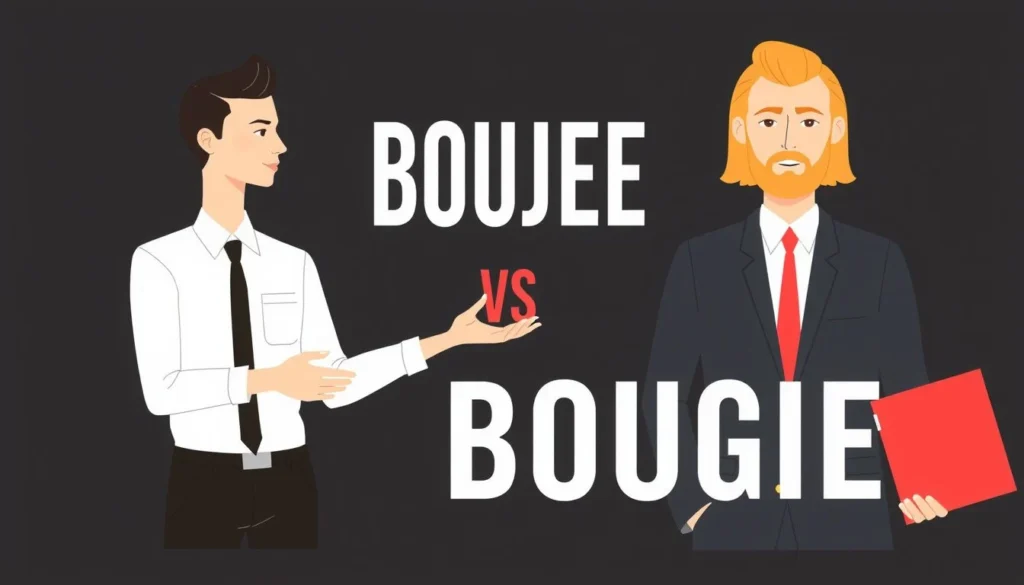
The Difference Between Boujee and Bougie
You will often see both spellings used. Here is a quick comparison:
| Term | Spelling | Connotation | Common Usage |
|---|---|---|---|
| Boujee | Double e | Glamorous, flashy, aspirational wealth | Social media, hip hop lyrics, describing influencers |
| Bougie | Single e | Pretentious, snobbish, trying too hard | Older usage, describing someone acting above their station |
Both words come from the same root, but “boujee” has a slightly more positive, playful tone in modern usage. “Bougie” can carry more negative judgment.
The “Left Off” Part: What Exclusion Means Here
Now we get to the heart of the left off bad and boujee meaning. The phrase “left off” simply means omitted, excluded, or not included. When you combine it with “bad and boujee,” you get a specific type of exclusion.
Being left off a bad and boujee list, event, or group means you were not considered cool enough, rich enough, or attractive enough to be included. The exclusion is tied to status.
Here is what that looks like in practice:
- A party promoter creates a VIP list for a rooftop event. Your name is not on it. You got left off the bad and boujee list.
- A group of friends plans a trip to a luxury resort in Tulum. Nobody invited you. You were left off the bad and boujee group chat.
- A fashion blogger curates a list of “must-follow” accounts. Your handle is missing. You got left off the bad and boujee influencer roundup.
The sting comes from the implication. You were not excluded for a neutral reason. You were excluded because someone decided you did not meet the standard of being attractive, wealthy, or fashionable enough.
Is Being Left Off Always a Bad Thing?
Not necessarily. Some people wear the exclusion as a badge of honor. If a “bad and boujee” group is known for being shallow, materialistic, or cliquey, being left off their list might be a relief.
Consider these perspectives:
- The negative view: You wanted to be included. Being left off hurts because it signals you were judged and found lacking.
- The neutral view: You did not care either way. The list or event was not on your radar.
- The positive view: You are glad to be excluded. You do not want to associate with people who value status over substance.
Pro Tip: Before you feel bad about being left off anything, ask yourself if you actually wanted to be on that list in the first place. If the answer is no, the exclusion costs you nothing.
Where You Will See “Left Off Bad and Boujee” Used
This phrase shows up in specific online and offline contexts. Understanding those contexts helps you recognize the phrase when you encounter it.
Social Media Captions and Comments
Instagram, TikTok, and X (formerly Twitter) are the primary habitats for this phrase. People use it in a few ways:
- Humble bragging: “Just got added to the guest list for the private dinner. Sorry to everyone who got left off bad and boujee.”
- Calling out exclusion: “Funny how I got left off bad and boujee brunch but y’all still ask me for money.”
- Self-deprecating humor: “Me, getting left off bad and boujee lists since 1997.”
The self-deprecating usage is common among people who know they do not fit the “bad and boujee” mold and are fine with it.
Hip Hop and Pop Culture Commentary
The phrase appears in discussions about music, celebrity, and entertainment. A music blog might write about “Artists left off bad and boujee festival lineups.” A fashion magazine might publish “Designers left off bad and boujee Met Gala invitations.”
In these contexts, “left off bad and boujee” functions as shorthand for “excluded from a prestigious or glamorous opportunity.”
Group Chats and Friend Drama
This is where the phrase gets personal. Group chats are notorious for creating in-groups and out-groups. Someone might notice they were left off a group chat where friends planned an expensive dinner or a shopping trip.
The phrase captures that specific feeling of being excluded from something that was supposed to be exclusive. It is not just being left out. It is being left out of something that was curated to feel special.
The Cultural Context: Why This Phrase Resonates
The left off bad and boujee meaning taps into something deeper than a simple slang phrase. It speaks to how we think about status, belonging, and self-worth in the social media age.
Social media has made exclusion visible in a way it never was before. You used to find out you were left off a guest list by not receiving an invitation. Now you find out by watching everyone else post stories from the event you were not invited to.
The phrase “left off bad and boujee” gives people language to talk about that experience. It is a way to name the specific type of exclusion that happens when wealth, beauty, and social status become the criteria for belonging.
The Economics of Being Boujee
There is a financial reality behind the phrase. Maintaining a “bad and boujee” lifestyle costs money. Designer clothes, luxury travel, expensive restaurants, and exclusive events all require disposable income.
When someone gets left off a bad and boujee list, the exclusion is often economic. They did not make the cut because they could not afford the lifestyle, or they were perceived as not being able to afford it.
This adds another layer to the phrase. It is not just about being cool. It is about being wealthy enough to participate.
The Gender Dynamics
The phrase “bad and boujee” is most commonly applied to women. The Migos song that popularized it uses the phrase to describe a female partner. In common usage, “bad and boujee” women are those who are attractive, well-dressed, and demanding of a certain standard of living.
Being “left off” a bad and boujee list can therefore carry gendered implications. Women might be excluded from social groups based on their appearance or their perceived wealth. The phrase gives voice to that specific type of social sorting.
Pro Tip: Context matters more than the dictionary definition here. Pay attention to who is using the phrase and what they are responding to. The tone can range from genuinely hurt to completely sarcastic.
How to Use “Left Off Bad and Boujee” Correctly
If you want to use this phrase without sounding like you are trying too hard, here are some guidelines.
Know Your Audience
This phrase works best in casual settings. Use it with friends, in group chats, or on social media where slang is welcome. Avoid it in professional emails, academic papers, or formal presentations. Your boss does not need to know about the bad and boujee list you got left off.
Match the Tone
The phrase can be funny, bitter, or matter-of-fact. Match your tone to the situation:
- Funny: “Got left off bad and boujee taco night because I brought store-brand salsa.”
- Bitter: “Left off bad and boujee again. Cool. Noted.”
- Matter-of-fact: “I was left off the bad and boujee brunch list. Probably for the best.”
Do Not Overuse It
Like any slang, this phrase loses its punch if you use it constantly. Save it for moments when it actually fits. That one time you got excluded from a fancy event? Perfect. Every minor social slight? Too much.
Understand the Layers
When you use this phrase, you are referencing a specific cultural moment. The Migos song, the social media era, the economics of exclusivity, and the gender dynamics all sit underneath the surface. You do not need to explain all of that every time you use the phrase, but you should know it is there.
Key Takeaways
- “Left off bad and boujee” means being excluded from a group, list, or event considered attractive, wealthy, or exclusive.
- “Bad” means attractive and confident. “Boujee” means luxurious and high-class, derived from “bourgeoisie.”
- The phrase was popularized by the 2016 Migos song “Bad and Boujee” and spread through social media.
- Being left off can feel like a status judgment, but some people embrace the exclusion as a positive.
- Use the phrase in casual contexts, match your tone to the situation, and avoid overusing it.
Frequently Asked Questions About Left Off Bad and Boujee Meaning
Q: What does it mean to be left off bad and boujee?
A: Being left off bad and boujee means you were excluded from a group, list, or event that is considered attractive, wealthy, flashy, or exclusive. The exclusion implies you did not meet the perceived standard for inclusion.
Q: Where did the phrase “bad and boujee” come from?
A: The phrase “bad and boujee” was popularized by the Migos song “Bad and Boujee” featuring Lil Uzi Vert, released in 2016. The song reached number one on the Billboard Hot 100 in January 2017.
Q: Is “boujee” the same as “bougie”?
A: Both words come from “bourgeoisie” and refer to upper-class or luxury-oriented behavior. “Boujee” has a more glamorous, aspirational connotation in modern slang, while “bougie” can carry a more negative, pretentious tone.
Q: Is being called “bad and boujee” a compliment?
A: Yes, being called “bad and boujee” is generally a compliment. It means you are considered attractive, confident, and someone who enjoys or embodies a luxurious lifestyle.
Q: Does “left off bad and boujee” always mean someone was excluded on purpose?
A: Not always. Sometimes exclusion is accidental or logistical. However, the phrase usually implies a deliberate curation process where someone decided who made the cut and who did not.
Q: Can men be described as “bad and boujee”?
A: Yes, although the phrase is more commonly applied to women. Men can be described as “bad and boujee” if they are considered attractive, stylish, and interested in luxury.
Q: Is it a bad thing to be left off a bad and boujee list?
A: It depends on your perspective. If you wanted to be included, it can sting. If you did not care or actively dislike the values associated with “bad and boujee” culture, being left off is neutral or even positive.
Q: How do I respond if someone says I got left off a bad and boujee list?
A: You can respond with humor, indifference, or confidence. A simple “I wasn’t trying to be on it anyway” or “Good, I saved money” works well. The key is not to act wounded if you were not actually invested.
References & Further Reading
- Billboard: Migos’ “Bad and Boujee” Hits No. 1 on Hot 100
- Dictionary.com: Boujee Definition and Origin
- Merriam-Webster: Bougie Definition
- Genius: Migos “Bad and Boujee” Lyrics and Annotations
—
About This Article
Written by a language and culture researcher who has spent years tracking how hip hop slang moves from lyrics to everyday conversation. This article draws on primary sources including the original song lyrics, dictionary documentation of slang terms, and analysis of social media usage patterns. The goal is to provide a clear, accurate explanation without academic jargon or unnecessary complexity.